


Starting an agriculture-related business in India can require significant investment. To support agriculture graduates and rural entrepreneurs, the Government of India introduced the Agriculture Clinic & Agribusiness Centre Scheme (ACABC Loan).
This scheme helps individuals start agriculture-related businesses such as:
- Soil testing labs
- Agri clinics
- Fertilizer shops
- Dairy units
- Custom hiring centers
- Agri consultancy services
Through the ACABC scheme, eligible applicants receive bank loans with government subsidy support.

In this detailed guide, we will explain:
- What ACABC loan is
- Loan amount and subsidy
- Eligibility criteria
- Required documents
- Step-by-step application process
Apart from ACABC, the government also supports food processing businesses through schemes like the PMFME scheme (Pradhan Mantri Formalisation of Micro Food Processing Enterprises), making it easier for small entrepreneurs to enter the agri-based value chain.

What is Agriculture Clinic & Agribusiness Centre Scheme (ACABC)?
The Agriculture Clinic & Agribusiness Centre Scheme is a government initiative launched by the Ministry of Agriculture & Farmers Welfare in collaboration with National Bank for Agriculture and Rural Development.

The goal of the scheme is to:
- Promote agriculture entrepreneurship
- Create self-employment opportunities
- Improve agriculture productivity
- Provide technical support to farmers
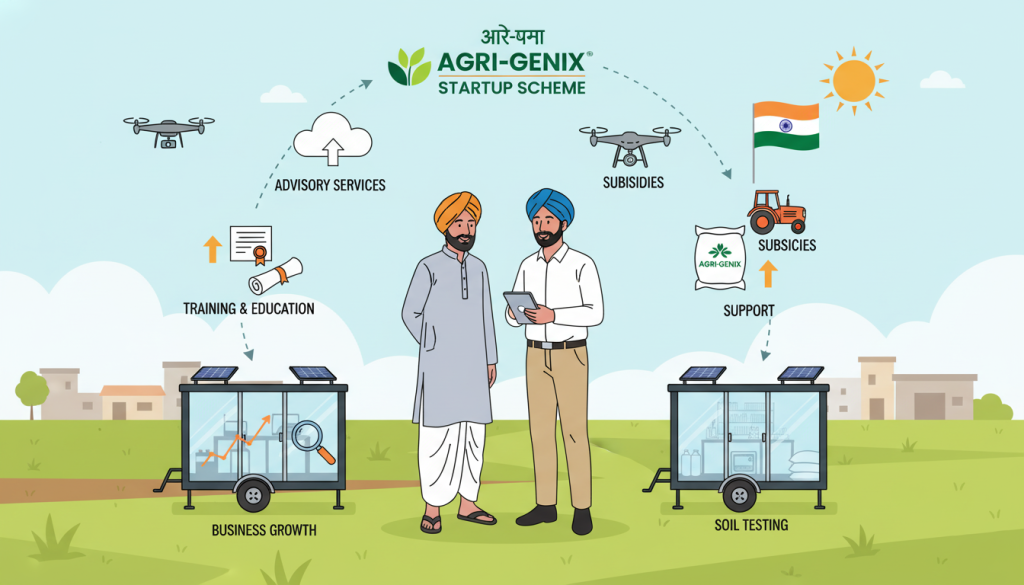
Under this scheme, trained agriculture professionals can start agriculture clinics or agribusiness centers with the help of bank loans and government subsidy.

Benefits of ACABC Loan
| Benefit | Details |
|---|---|
| Government Subsidy | Up to 44% subsidy for eligible candidates |
| Self Employment | Helps agriculture graduates start their own business |
| Skill Training | Free entrepreneurship training provided |
| Bank Loan Support | Loans available through nationalized banks |
| Agriculture Development | Improves productivity and farmer advisory services |
ACABC Loan Amount
The loan amount depends on the type of agribusiness project.
| Category | Maximum Loan Amount |
|---|---|
| Individual Project | ₹20 Lakhs |
| Group Project | ₹100 Lakhs |
In addition to ACABC funding, many entrepreneurs also explore an agriculture infrastructure loan to build facilities like cold storage units, warehouses, and irrigation systems. Combining these financial options can significantly strengthen the overall agribusiness setup.
Banks evaluate the project viability before approving the loan.
The scheme encourages businesses such as:
- Seed processing units
- Dairy and poultry farming
- Soil testing labs
- Cold storage units
- Farm machinery hiring centers

Subsidy Under ACABC Scheme
The government provides capital subsidy on the project cost.
| Category | Subsidy |
|---|---|
| General Category | 36% |
| SC/ST/Women | 44% |
The subsidy is released through NABARD after the project becomes operational.
Eligibility Criteria
Applicants must meet the following eligibility conditions.
| Criteria | Requirement |
|---|---|
| Educational Qualification | Agriculture graduate or related field |
| Age Limit | 18 years or above |
| Training | Mandatory ACABC training |
| Business Type | Agriculture related enterprise |
| Nationality | Indian citizen |
Agriculture diploma holders may also be eligible depending on the project.

Documents Required for ACABC Loan
Applicants must submit the following documents.
Personal Documents
- Aadhaar Card
- PAN Card
- Passport size photographs
- Address proof
Educational Documents
- Agriculture degree certificate
- Training completion certificate
Business Documents
- Detailed project report (DPR)
- Bank account statements
- Quotation for machinery/equipment
- Land documents (if required)
Preparing a strong project report increases loan approval chances.
Step-by-Step Application Process for ACABC Loan
Step 1: Complete ACABC Training
Applicants must first enroll in ACABC entrepreneurship training conducted by approved institutes.
Training includes:
- Agribusiness planning
- Financial management
- Market analysis
Step 2: Prepare Project Report
Create a detailed project plan including:
- Business idea
- Investment requirement
- Revenue projection
- Equipment list
Step 3: Approach a Bank
Apply for a loan at:
- Nationalized banks
- Regional rural banks
- Cooperative banks
Step 4: Loan Evaluation
The bank evaluates:
- Project viability
- Applicant profile
- Financial feasibility
Step 5: Loan Approval & Subsidy
After approval:
- Loan is disbursed by the bank
- Subsidy is processed through NABARD
Types of Businesses Allowed Under ACABC
The scheme supports many agriculture-related enterprises including:
- Agri clinics
- Seed processing units
- Soil testing laboratories
- Dairy farming units
- Poultry farms
- Many of these activities, especially dairy and poultry farming, can also benefit from government initiatives like the livestock mission, which provides additional support for animal husbandry businesses.
- Farm machinery rental services
- Organic farming businesses
- Agri input shops
These businesses help modernize Indian agriculture and create rural employment.
Why Choose Dhanrekha Capital for ACABC Loan?
Applying for a government agriculture loan can be complex. Dhanrekha Capital helps simplify the process.
Benefits of applying through a loan DSA:
- Faster loan assistance
- Expert consultation
- Documentation support
- Multiple bank options
- Higher approval chances
If you want to start an agriculture business, our experts can guide you through the entire ACABC loan process.
Frequently Asked Questions (FAQs)
What is ACABC Loan?
ACABC loan is a government supported loan scheme that helps agriculture graduates start agribusiness ventures with subsidy support.
What is the maximum loan amount under ACABC?
Individuals can get up to ₹20 lakh, while group projects can receive up to ₹1 crore.
Is training mandatory for ACABC scheme?
Yes, applicants must complete ACABC entrepreneurship training before applying for the loan.
Who provides subsidy in ACABC scheme?
The subsidy is provided through NABARD after the project becomes operational.
Can agriculture diploma holders apply?
In many cases yes, but eligibility depends on the project and training requirements.